Tokenization is reshaping how assets are structured, accessed, and exchanged. From real estate and commodities to intellectual property and private credit, a growing range of real-world assets can now be represented as programmable digital tokens, enabling fractional ownership, enhanced liquidity, and global transferability under defined legal frameworks.
With the global tokenized asset market set to revolutionize traditional finance, IXS is at the forefront of this evolution. Let’s explore the types of assets that can be tokenized and how this innovation is opening the door to an entirely new era of investment.
Key Takeaway:
- A growing range of real-world assets, from tangible and intangible to financial and fiat-backed can now be tokenized under defined legal and regulatory frameworks.
- Real estate, commodities, U.S. treasuries and private credit are emerging as asset classes where tokenization may offer increased access, programmability, and optional liquidity.
- Stablecoins and tokenized equities are already widely used, with institutions like Robinhood, Coinbase and Nasdaq planning on/already launching live offerings in 2025.
Tokenization: The Basics
Tokenization converts ownership or economic rights in physical or financial assets into digital tokens recorded on a blockchain. These Real-World Asset (RWA) tokens bring unparalleled transparency, efficiency, and accessibility to global markets.
Why is tokenization such a big deal?
For issuers, it unlocks liquidity, simplifies cross-border investments, and reduces operational costs. For investors, tokenization offers fractional ownership, breaking down barriers to traditionally inaccessible assets.
According to a Boston Consulting Group forecast, tokenization is expected to represent $16.1 trillion in tokenized assets by 2030, accounting for 10% of global GDP. The impact on traditional private markets, characterized by exclusivity and limited liquidity, will be particularly profound.
Let’s explore the main asset classes that can benefit from tokenization and how IXS is leading the charge in these innovations.
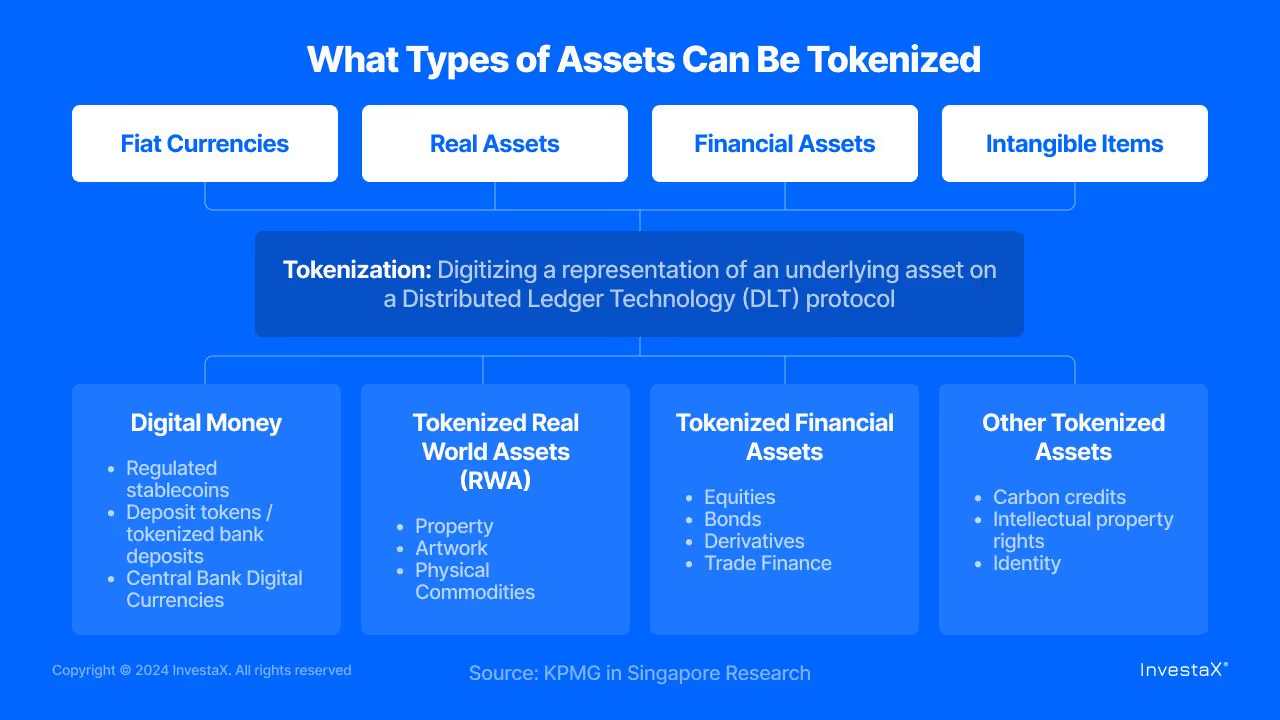
Four Types Of Assets That Can Be Tokenized
Below are four key categories of assets that are currently being tokenized at scale, along with real-world examples and market data.
1. Tangible Assets
Tangible assets, such as real estate, artworks, and physical commodities, have traditionally been high-value investments requiring substantial capital. Tokenization opens new doors for these assets:
- Real Estate: With a global market valued at over $637.80 trillion by 2024, real estate remains one of the most illiquid asset types. Tokenizing real estate can break down high-value properties into smaller, tradeable units, making them accessible to a broader range of investors and boosting liquidity. Imagine owning a fraction of a $10 million commercial building through digital tokens, which can be traded on secondary markets.
- Commodities: Tokenized commodities like gold have seen impressive growth. As of 2024, the market cap for commodity-backed tokens exceeds $1 billion, with gold tokenization leading the way. These tokens offer a secure and liquid means of investing in precious metals without the physical handling.
2. Intangible Assets
Intangible assets, including carbon credits, renewable energy, and intellectual property, are ripe for tokenization.
- Carbon Credits & Renewable Energy: ESG assets often involve complex trading processes. Tokenization simplifies this by creating transparent, tradable units that can be easily accessed by smaller investors. For instance, IXS’s sister platform, InvestaX, has been instrumental in launching projects like Climate 8 Holdings Ltd’s carbon credits, which leverage tokenization for efficiency and accessibility.
- Intellectual Property: Managing IP rights such as patents or copyrights can be cumbersome. Tokenizing these rights on a blockchain provides a clear, secure record of ownership and enables easier licensing and royalty management.
3. Financial Assets
Financial assets benefit significantly from tokenization:
- Stocks, Bonds, and Derivatives: Tokenizing financial instruments allows them to be traded more efficiently, broadens accessibility, and integrates with decentralized finance (DeFi) applications for enhanced functionality. For example, the World Bank has issued digital bonds using Distributed Ledger Technology (DLT), showcasing the practical benefits of financial asset tokenization.
4. Fiat Currencies
Fiat currencies are also experiencing a digital transformation through tokenization:
- Stablecoins: Digital representations of fiat currencies, such as USDT and USDC, maintain price stability through collateralization. They dominate the tokenized asset market, offering a stable alternative to traditional cryptocurrencies.
- Central Bank Digital Currencies (CBDCs): CBDCs represent digital versions of national currencies, issued and regulated by central banks. They promise to enhance transaction efficiency and financial inclusion, with countries like China and Nigeria already pioneering their use.
Commonly Asked Questions
Q1: Do tokenized assets qualify as securities?
In most jurisdictions, yes. If the token represents ownership, income rights, or investment intent, it will likely be classified as a security. Issuers must comply with local securities laws and investor qualification rules.
Q2: How do I choose the right jurisdiction for my tokenized asset offering?
Jurisdiction selection depends on multiple factors, including the nature of the asset, the target investor base, and applicable securities laws. Issuers often look to jurisdictions with established digital asset frameworks, such as Singapore, Switzerland, or The Bahamas, for legal clarity and operational flexibility.
Q3: Is secondary liquidity guaranteed for tokenized assets?
While tokenization enables tradability, actual liquidity depends on market demand, platform access, and jurisdictional restrictions. Many tokenized offerings are structured for long-term holding with optional exit mechanisms.
The IXS Advantage
At IXS, we’re not just observing these changes; we’re actively driving them. Our platform is designed to support various asset classes, enhancing liquidity, transparency, and market efficiency. With a focus on democratizing investment opportunities, IXS empowers investors by providing access to tokenized assets that were once reserved for a select few. And the best part? You can start investing in these assets for as little as $1.
Ready to explore the world of tokenized RWA? Whether you're interested in tangible investments like real estate or intangible assets like intellectual property, IXS is your gateway to the future of investment.
To learn more about how IXS is pioneering asset tokenization, visit the IXS Learning Hub or watch our comprehensive RWA masterclass with our CEO, Julian Kwan. This masterclass covers everything you need to know about RWAs, from their history to nuances and misconceptions.
Want to bring your business into the blockchain? Contact us to book a call or get a live demo of how IXS can transform your asset strategy.